 The Ancient Guide to Modern Life
. Natalie Haynes, 2011.
Drawing numerous parallels with modern events, Haynes reveals the surprisingly accessible societies of Ancient Greece and Rome. While reviews have made much of her work as a stand-up comic, the book is not a zany routine but rather a droll and accessible exploration of the classical world and its continued relevance.
 Assassination Vacation
. Sarah Vowell, 2005.
Vowell drags her reluctant family, friends, and any stranger who will listen to her into the macabre history of the first three U.S. presidential assassinations. Her unseemly passion for historical plaques and offbeat museums illuminates the tragic ends of Abraham Lincoln, James Garfield, and William McKinley and the disturbing individuals who thought to overturn the will of the American electorate. From the museum display of Lincoln's skull fragments to the desert island prison of John Wilkes Booth's coconspirators to a Nineteenth Century free love commune, Vowell turns up endless tidbits and uncanny connections. It's less a linear travelogue and more a whirlwind of fascinating trivia and black humor with a gleefully obsessed hostess.
 At Home: A Short History of Private Life
. Bill Bryson, 2010.
Trust Bill Bryson to write his most wide-ranging book yet without leaving home. Framed as an exploration of his 1851 British parsonage, this fascinating history delves into the astonishing stories behind each room of a house and its contents. What's most astonishing is how commonplace amenities like cushions and adequate lighting were once revolutionary luxuries. Readers will gain newfound appreciation for the astonishingly recent concept of being comfortable at home.
 Blood and Thunder: An Epic of the American West
. Hampton Sides, 2006.
Legendary frontiersman Kit Carson looms in the foreground of a story that ranges from the great land-grab of the Mexican-American War to the subjugation of the Navajo. Like a scout breaking trail in a vast wilderness, historian Sides finds the essential paths to dramatize the broad story of the United States' westward expansion, and succeeds in conveying the complex motivations of settlers, soldiers, and natives.
 Born on a Mountaintop: On the Road with Davy Crockett and the Ghosts of the Wild Frontier
. Bob Thompson, 2013.
 A Burglar's Guide to the City
. Geoff Manaugh, 2016.
 Chasing Venus: The Race to Measure the Heavens
. Andrea Wulf, 2013.
 The Devil and Sherlock Holmes: Tales of Murder, Madness, and Obsession
. David Grann, 2010.
This collection of articles, mostly for
The New Yorker, are tied together only by a theme of obsession and David Grann's nose for incredible stories. The mysterious strangulation of a Sherlock Holmes scholar, an amnesiac firefighter haunted by whether heroism or cowardice led to his survival at the World Trade Center, a murder in Poland whose only clue is a disturbing postmodern novel, a marine biologist hunting for giant squid larvae, a con artist who just wants to be loved, and several more tales are expertly told.
 Don't Sleep, There are Snakes: Life and Language in the Amazonian Jungle
. Daniel L. Everett, 2008.
Arriving as a missionary among the Pirahã, an Amazonian Indian group, Everett encountered a people who have no creation myths or fiction, and whose language lacks greetings, numbers, colors, and embedded sentences. Nevertheless they are extremely happy and friendly and supremely adapted to their rainforest environment. Everett recounts his adventures and discoveries living among the Pirahã for much of the last 30 years, which led him to question and reject not only mainstream linguistic theory but his Christianity as well.
 1491: New Revelations of the Americas Before Columbus
. Charles C. Mann, 2005.
Revelatory consolidation of new research which indicates that the Americas were highly populated, sophisticated societies. Tenochtitlán was larger than any city in Europe, the socialist Inkas had conquered hunger and unemployment, Amazonia and the Great Plains were human-managed landscapes, and cities in coastal Peru were contemporaneous with the "first" civilizations in Mesopotamia. The "virgin landscape" reported by colonists was the result of European-spawned plagues that ripped through the Americas ahead of the explorers. Hugely informative proof that our picture of Native America is flawed and ethnocentric, but not exactly for the casual lay reader.
 Genghis Khan and the Making of the Modern World
. Jack Weatherford, 2004.
Charts the rise of the Mongol Empire from Genghis Khan's ignominious childhood in an outcast clan to its flowering under his grandson Khubilai Khan. Anthropology professor Weatherford, from whom I once took a class, relates the innovative military and administrative tactics of the Mongols to elements of their herding and warring culture. The last chapter reveals how the well-run Mongol Empire was the envy of medieval Europe, jump-starting the Renaissance, and their mistaken reputation today as barbarians was caused by confusion with Tamerlane a century later.
 Ghosts of Gold Mountain: The Epic Story of the Chinese Who Built the Transcontinental Railroad
. Gordon H. Chang, 2019.
 The Great Detective: The Amazing Rise and Immortal Life of Sherlock Holmes
. Zach Dundas, 2015.
 House of Rain: Tracking a Vanished Civilization Across the American Southwest
. Craig Childs, 2007.
Experienced desert wanderer Childs traces the journeys of the Anasazi, catching tantalizing glimpses of their complex societies everywhere from well-known ruins to uncharted back canyons. At turns academic and lyrical, Childs is a unique voice that conveys the siren song of a people veiled by time and an arduous environment.
 How Star Wars Conquered the Universe: The Past, Present, and Future of a Multibillion Dollar Franchise
. Chris Taylor, 2014.
 Indian Givers: How the Indians of the Americas Transformed the World
. Jack Weatherford, 1988.
A mindblowing demonstration of how history and culture were actively shaped by New World resources. For example the colonization of the New World was tied to a European population explosion fed by Native American crops like corn and potatoes and underwritten by the gold looted from the Aztecs and Inka. A quick, easy read that will truly change the way you look at the world.
 Jungle of Stone: The True Story of Two Men, Their Extraordinary Journey, and the Discovery of the Lost Civilization of the Maya
. William Carlsen, 2016.
 A Land Gone Lonesome: An Inland Voyage Along the Yukon River
. Dan O'Neill, 2006.
Alaska historian O'Neill journeys down a section of the Yukon, relating anecdotes of local history from the settlers of this beautiful but uncompromising landscape. The evocative descriptions flag as O'Neill enters the Yukon-Charley Rivers National Preserve. The second half of the book is a catalogue of ruined cabins and a persuasive but repetitive argument that modern land management policies are killing off the culture of subsistence living.
 The Last Imaginary Place: A Human History of the Arctic World
. Robert McGhee, 2005.
This engrossing overview of pan-Arctic history covers everyone from the indigenous inhabitants of North America and Eurasia to the Norse settlers to the white explorers and entrepreneurs of recent centuries. McGhee, a Canadian archaeologist, reveals that the Arctic was neither a marginal wasteland nor isolated from the early global economy. Rather he depicts a bounteous land of good hunting and numerous contacts with the world to the south.
 Life and Death in the Andes: On the Trail of Bandits, Heroes, and Revolutionaries
. Kim MacQuarrie, 2015.
 The Lost World of the Old Ones: Discoveries in the Ancient Southwest
. David Roberts, 2015.
 Manhunt: The 12-Day Chase for Lincoln's Killer
. James L. Swanson, 2007.
 Meet Me in Atlantis: My Obsessive Quest to Find the Sunken City
. Mark Adams, 2015.
 The Monuments Men: Allied Heroes, Nazi Thieves, and the Greatest Treasure Hunt in History
. Robert M. Edsel & Bret Witter, 2010.
 Napoleon & St Helena: On the Island of Exile
. Johannes Willms, 2008.
 On the Map: A Mind-Expanding Exploration of the Way the World Looks
. Simon Garfield, 2013.
 102 Minutes: The Untold Story of the Fight to Survive Inside the Twin Towers
. Jim Dwyer & Kevin Flynn, 2005.
Through interviews with civilians and rescue personnel who escaped the World Trade Center on 9/11, and transcripts of phone calls made by those who did not, two
New York Times journalists piece together a detailed moment-by-moment account of miraculous escapes, bravery, desperation, and the tragic
systemic failures that cost lives.
 The Republic of Pirates
. Colin Woodard, 2007.
Woodard recounts the true history of the heyday of piracy from 1696 to 1732, which reached its apex from 1715 to 1725 with the takeover of Nassau in the Bahamas. From this anarchic base several infamous pirate captains menaced the Caribbean and Eastern Seaboard: Black Sam Bellamy, Edward "Blackbeard" Thatch, and Charles Vane. Woodard also follows Woodes Rogers, the former privateer who ultimately recaptured Nassau and ushered in the end of this republic of pirates. As a history, it's definitely of the "This happened, then this happened" school; I would have liked to see more exploration of the pirates' legacy and the claim that the pirate republic helped inspire democracy and the American Revolution. Nevertheless it's highly readable, with plenty of gritty detail and daring sea battles.
 Rez Life: An Indian's Journey Through Reservation Life
. David Treuer, 2013.
 Rubicon: The Last Years of the Roman Republic
. Tom Holland, 2003.
A detailed but compulsively readable account of the life-and-death machinations that brought an end to the Roman Republic and spawned an empire. Holland's thesis is that Roman culture held no distinction between public and private advancement. Thus personal gain was inherently political, and the stakes were raised and raised until the only way to succeed was to seize total power.
 Sea People: The Puzzle of Polynesia
. Christina Thompson, 2019.
 The Sinner's Grand Tour: A Journey Through the Historical Underbelly of Europe
. Tony Perrottet, 2011.
 Spam Kings: The Real Story Behind the High-Rolling Hucksters Pushing Porn, Pills, and %*@)# Enlargements
. Brian McWilliams, 2004.
Unusual personalities fill both factions in this chronicle of the battle between spammers and the everyday people who aligned to fight them during the early days of the internet. The machinations playing out over AOL and USENETs may seem a little quaint, but the humanization of the subjects through interviews and details mined from forums and archived chatroom exchanges invigorates the tale.
 Underground: A Human History of the Worlds Beneath Our Feet
. Will Hunt, 2018.
 Unfamiliar Fishes
. Sarah Vowell, 2011.
 West Like Lightning: The Brief, Legendary Ride of the Pony Express
. Jim DeFelice, 2018.
 Why Did the Chicken Cross the World?: The Epic Saga of the Bird that Powers Civilization
. Andrew Lawler, 2014.
 Wicked River: The Mississippi River When it Last Ran Wild
. Lee Sandlin, 2011.
 The World in a Grain: The Story of Sand and How it Transformed Civilization
. Vince Beiser, 2018.
Art
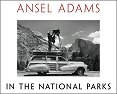 Ansel Adams in the National Parks. 2010.
While most closely associated with Yosemite and the Sierras, Ansel Adams photographed over 40 national park units. This rich collection includes the iconic images along with many others rarely and even never published, all crisply printed. Yosemite still carries the lion's share, and there are a few non-national park images included for some reason, but overall there's a nice variety. Edited by a former assistant to Adams, the book includes new and reprinted essays, quotes, and other insights into the masterful photographer's process.
Ansel Adams in the National Parks. 2010.
While most closely associated with Yosemite and the Sierras, Ansel Adams photographed over 40 national park units. This rich collection includes the iconic images along with many others rarely and even never published, all crisply printed. Yosemite still carries the lion's share, and there are a few non-national park images included for some reason, but overall there's a nice variety. Edited by a former assistant to Adams, the book includes new and reprinted essays, quotes, and other insights into the masterful photographer's process.
 Atlas of Remote Islands: Fifty Islands I Have Never Set Foot on and Never Will. Judith Schalansky, 2010.
Cartography is an art, and the conjuration here of faraway islands (all depicted at the same scale) with line and dot is quietly evocative for the armchair traveller. Each entry is accompanied with lyrical prose that tends to underscore the ungraspability of these lands even as their physical dimensions are precisely captured.
Atlas of Remote Islands: Fifty Islands I Have Never Set Foot on and Never Will. Judith Schalansky, 2010.
Cartography is an art, and the conjuration here of faraway islands (all depicted at the same scale) with line and dot is quietly evocative for the armchair traveller. Each entry is accompanied with lyrical prose that tends to underscore the ungraspability of these lands even as their physical dimensions are precisely captured.
 Iceland: Land of the Sagas. Photographs by Jon Krakauer & text by David Roberts, 1990.
Introduces the history and landscape of this unique nation through its ancient sagas. The two Outside magazine writers visit key locations from the tales in the present day. The photograph printing quality is already looking dated, unfortunately, but an enjoyable book nonetheless.
Iceland: Land of the Sagas. Photographs by Jon Krakauer & text by David Roberts, 1990.
Introduces the history and landscape of this unique nation through its ancient sagas. The two Outside magazine writers visit key locations from the tales in the present day. The photograph printing quality is already looking dated, unfortunately, but an enjoyable book nonetheless.
 Masters of Deception: Escher, Dali, & the Artists of Optical Illusion. Al Seckel, 2004.
A delightful collection of famous and less-known artists past and present whose work incorporates illusions and other optical tricks. The impressive variety within the book is augmented by numerous video clips on an official website
Masters of Deception: Escher, Dali, & the Artists of Optical Illusion. Al Seckel, 2004.
A delightful collection of famous and less-known artists past and present whose work incorporates illusions and other optical tricks. The impressive variety within the book is augmented by numerous video clips on an official website.
 Our National Monuments: America's Hidden Gems
. QT Luong, 2021.
 The Past From Above: Aerial Photographs of Archaeological Sites
. Photographs by Georg Gerster & edited by Charlotte Trumpler, 2005.
Collects 250 truly impressive photographs of ancient sites from this German aerial photographer's 4 decade career. The images are arranged thematically rather than geographically, highlighting similarities among sites all over the world. The text on each site is unreadably dry, but Gerster's introduction and appendix of anecdotes are much more accessible.
 To the Ends of the Earth: Adventures of an Expedition Photographer
. Gordon Wiltsie, 2006.
Wiltsie, whose work has appeared frequently in
National Geographic, releases this portfolio/memoir of the mountaineering, polar, and anthropological expeditions he has been a member of. The sublime images are underscored by his explanation of the dangers to both photographer and subject in capturing
them.
 Wild Minnesota: A Celebration of Our State's Natural Beauty
. Text by Shawn Perich & photography by Gary Alan Nelson, 2005.
A beautiful collection of photographs taken around Minnesota's natural areas, arranged by habitat. Moreover the accompanying essays, usually an afterthought in such coffee-table books, are actually informative and interesting.
Biography & Memoir
 The Adventures of Alexander Von Humboldt. Andrea Wulf and Lillian Melcher, 2019.
 Candy Girl: A Year in the Life of an Unlikely Stripper. Diablo Cody, 2006.
A revelatory look at the working conditions on the Minneapolis strip club scene, and the factors that drew an educated, stable feminist into its intoxicating blur. Cody is a natural at wry humor and clever turns of phrase. And now that she's won an Oscar (Best Original Screenplay for Juno), you don't have to read her book furtively.
Candy Girl: A Year in the Life of an Unlikely Stripper. Diablo Cody, 2006.
A revelatory look at the working conditions on the Minneapolis strip club scene, and the factors that drew an educated, stable feminist into its intoxicating blur. Cody is a natural at wry humor and clever turns of phrase. And now that she's won an Oscar (Best Original Screenplay for Juno), you don't have to read her book furtively.
 Come on Shore and We Will Kill and Eat You All: A New Zealand Story. Christina Thompson, 2008.
 Finding Everett Ruess: The Life and Unsolved Disappearance of a Legendary Wilderness Explorer. David Roberts, 2011.
 Hey Ranger! True Tales of Humor & Misadventure from America's National Parks. Jim Burnett, 2005.
A retired National Park ranger recounts anecdotes from his stints at Lake Mead National Recreation Area, Buffalo National River, Colonial National Historical Park, and Glacier National Park. Burnett's avuncular storytelling occasionally goes overboard with set-up (not sure how boat ramps work? Don't worry, he'll explain in great detail). Nevertheless these droll tales offer an amusing and revelatory look at the true nature of the ranger job and the shenanigans that park visitors get themselves into.
Hey Ranger! True Tales of Humor & Misadventure from America's National Parks. Jim Burnett, 2005.
A retired National Park ranger recounts anecdotes from his stints at Lake Mead National Recreation Area, Buffalo National River, Colonial National Historical Park, and Glacier National Park. Burnett's avuncular storytelling occasionally goes overboard with set-up (not sure how boat ramps work? Don't worry, he'll explain in great detail). Nevertheless these droll tales offer an amusing and revelatory look at the true nature of the ranger job and the shenanigans that park visitors get themselves into.
 Into the Wild. Jon Krakauer, 1996.
Chris McCandless renounced his affluent background and sought enlightenment by living as a vagabond. His grand adventure came to a tragic end outside Denali National Park. Unsettled by parallels with his own youth, Krakauer delivers a concise, gripping examination of the nature of risk, life on the fringe, and the call of the wild.
Into the Wild. Jon Krakauer, 1996.
Chris McCandless renounced his affluent background and sought enlightenment by living as a vagabond. His grand adventure came to a tragic end outside Denali National Park. Unsettled by parallels with his own youth, Krakauer delivers a concise, gripping examination of the nature of risk, life on the fringe, and the call of the wild.
 The Last Season. Eric Blehm, 2006.
In his 28th consecutive summer in Kings Canyon National Park, ranger Randy Morgenson left his backcountry ranger station for a three-day patrol... and disappeared. As search teams comb the High Sierra wilderness, unsettling details emerge to fuel their speculations: was it accident, foul play, or something more deliberate? Journalist Blehm's account intercuts the urgent search and rescue operation with Morgenson's remarkable life, mixing a real-life mystery with an emotionally resonant biography of a wilderness champion.
The Last Season. Eric Blehm, 2006.
In his 28th consecutive summer in Kings Canyon National Park, ranger Randy Morgenson left his backcountry ranger station for a three-day patrol... and disappeared. As search teams comb the High Sierra wilderness, unsettling details emerge to fuel their speculations: was it accident, foul play, or something more deliberate? Journalist Blehm's account intercuts the urgent search and rescue operation with Morgenson's remarkable life, mixing a real-life mystery with an emotionally resonant biography of a wilderness champion.
 The Latehomecomer: A Hmong Family Memoir. Kao Kalia Yang, 2008.
One of the first memoirs by a Hmong-American may chart the usual story of an immigrant family, but the emotionally resonant details of the Yangs' desperate flight from genocide in Laos, stagnation in a refugee camp in Thailand, and settlement in St Paul (with its blessings and challenges) is an amazing testament to strength and hope. It's also a sorely needed look look at the Hmong people; the author wryly recalls how her lessons on the Vietnam War in school never mentioned the Hmong, who fought as insurgents for the Americans and lost their homeland because of it.
The Latehomecomer: A Hmong Family Memoir. Kao Kalia Yang, 2008.
One of the first memoirs by a Hmong-American may chart the usual story of an immigrant family, but the emotionally resonant details of the Yangs' desperate flight from genocide in Laos, stagnation in a refugee camp in Thailand, and settlement in St Paul (with its blessings and challenges) is an amazing testament to strength and hope. It's also a sorely needed look look at the Hmong people; the author wryly recalls how her lessons on the Vietnam War in school never mentioned the Hmong, who fought as insurgents for the Americans and lost their homeland because of it.
 My Life in Dire Straits. John Illsley, 2021.
 Nature Noir: A Park Ranger's Patrol in the Sierra. Jordan Fisher Smith, 2005.
Fisher Smith recounts stories from his stint as a ranger in California's Auburn State Recreation Area, a park in limbo because the whole canyon is slated to be flooded by a dam that may never be built. True crime reporting and nature observation combine to make a fascinating and unique book. A must for fans of Nevada Barr.
Nature Noir: A Park Ranger's Patrol in the Sierra. Jordan Fisher Smith, 2005.
Fisher Smith recounts stories from his stint as a ranger in California's Auburn State Recreation Area, a park in limbo because the whole canyon is slated to be flooded by a dam that may never be built. True crime reporting and nature observation combine to make a fascinating and unique book. A must for fans of Nevada Barr.
 Persepolis: The Story of a Childhood. Marjane Satrapi, 2003.
In graphic novel format, illustrator Satrapi recounts her childhood in Iran, as the only daughter of a progressive family during the Islamist Revolution. Balancing atrocities with humor, this is an eye-opening and fast read.
Persepolis: The Story of a Childhood. Marjane Satrapi, 2003.
In graphic novel format, illustrator Satrapi recounts her childhood in Iran, as the only daughter of a progressive family during the Islamist Revolution. Balancing atrocities with humor, this is an eye-opening and fast read.
 Pyongyang. Guy Delisle, 2005.
 The Story of My Life. Helen Keller, 1903.
Written serially while she was attending college, Keller's autobiography presents an upbeat and revealing look at her early life.
The Story of My Life. Helen Keller, 1903.
Written serially while she was attending college, Keller's autobiography presents an upbeat and revealing look at her early life.
 Submerged: Adventures of America's Most Elite Underwater Archeology Team. Daniel Lenihan, 2002.
The original chief of the National Park Service's Submerged Cultural Resources Unit recounts how he parlayed his experience cave diving in Florida to establishing SCRU ("The best acronym in government"), a daring team of experts who document and survey shipwrecks and other underwater heritage. Their missions take them from western reservoirs to the warm waters of Biscayne and Dry Tortugas National Parks, and to the frigid depths off Isle Royale. Collaborations with the U.S. Navy take them from the U.S.S. Arizona in Pearl Harbor to World War II materiel sunk in the Aleutians and Micronesia. Like survey work, this enthralling book barely has time to scratch the surface before zipping to another corner of the earth, leaving both the SCRU team and the reader wishing there were time to linger and learn more.
Submerged: Adventures of America's Most Elite Underwater Archeology Team. Daniel Lenihan, 2002.
The original chief of the National Park Service's Submerged Cultural Resources Unit recounts how he parlayed his experience cave diving in Florida to establishing SCRU ("The best acronym in government"), a daring team of experts who document and survey shipwrecks and other underwater heritage. Their missions take them from western reservoirs to the warm waters of Biscayne and Dry Tortugas National Parks, and to the frigid depths off Isle Royale. Collaborations with the U.S. Navy take them from the U.S.S. Arizona in Pearl Harbor to World War II materiel sunk in the Aleutians and Micronesia. Like survey work, this enthralling book barely has time to scratch the surface before zipping to another corner of the earth, leaving both the SCRU team and the reader wishing there were time to linger and learn more.
 Trials of the Earth: The True Story of a Pioneer Woman. Mary Mann Hamilton, 2016.
 Warrior Woman: The Story of Lozen, Apache Warrior and Shaman. Peter Aleshire, 2001.
Humor & Non-narrative
 America (the Book): A Citizen's Guide to Democracy Inaction. Written and edited by Jon Stewart et al., 2004.
This lavishly illustrated parody of your old social studies textbooks successfully translates the humor of The Daily Show into print form.
America (the Book): A Citizen's Guide to Democracy Inaction. Written and edited by Jon Stewart et al., 2004.
This lavishly illustrated parody of your old social studies textbooks successfully translates the humor of The Daily Show into print form.
 The Areas of My Expertise. John Hodgman, 2005.
This parody almanac prides itself on containing no actual facts, instead spinning a detailed and steadfastly droll hodgepodge of esoteric whimsy. Fans of erudite wit will enjoy this meandering miscellany of "COMPLETE WORLD KNOWLEDGE" and its follow-ups More Information Than You Require (2008) and That Is All (2012).
The Areas of My Expertise. John Hodgman, 2005.
This parody almanac prides itself on containing no actual facts, instead spinning a detailed and steadfastly droll hodgepodge of esoteric whimsy. Fans of erudite wit will enjoy this meandering miscellany of "COMPLETE WORLD KNOWLEDGE" and its follow-ups More Information Than You Require (2008) and That Is All (2012).
 The Book of General Ignorance. John Lloyd & John Mitchinson, 2006.
I devoured books about common misconceptions in my youth, so it's interesting to see one that is not only new, but debunks many previous debunking efforts. According to this book, goldfish have decent memories, glass is actually a solid, and water really is a faint shade of blue. However very few sources are credited, and most of the entries verge off into other trivia rather than backing up their revelations, leading astute readers to wonder whether this book is any more accurate than all the other trivia books.
The Book of General Ignorance. John Lloyd & John Mitchinson, 2006.
I devoured books about common misconceptions in my youth, so it's interesting to see one that is not only new, but debunks many previous debunking efforts. According to this book, goldfish have decent memories, glass is actually a solid, and water really is a faint shade of blue. However very few sources are credited, and most of the entries verge off into other trivia rather than backing up their revelations, leading astute readers to wonder whether this book is any more accurate than all the other trivia books.
 Economy of Errors. Andrew Marlatt, 2002.
If The Onion had had a business section, it would have been SatireWire.com
Economy of Errors. Andrew Marlatt, 2002.
If The Onion had had a business section, it would have been SatireWire.com's
BusinessMonth Weekly magazine, which has been compiled in this volume since the website ceased publication. Humor based on the late 1990s internet economy bubble will get progressively more dated, but there's still a lot of laughs to be found here.
 Found: The Best Lost, Tossed, and Forgotten Items from Around the World
. Davy Rothbart, 2004.
Based on a website and zine, this collection reprints compelling notes, letters, and photos found and sent in by readers. At turns funny, touching, and maddeningly inexplicable, these finds spark the imagination and the voyeur in everyone. Follow-up is
Found II (2006).
 Jetlag Travel Guides
. Santo Cilauro, Tom Gleisner, & Rob Sitch, 2003-2006.
Presenting eating, lodging, and sightseeing options in fictitious but realistic-sounding countries around the world, these parody travel guides have to be seen to be disbelieved. Exhaustively detailed and exhaustingly funny. Titles so far are the Eastern European
Molvanîa (2003), the Southeast Asian
Phaic Tăn (2004), and the Latin American
San Sombrèro (2006).
 Native American Archaeology in the Parks: A Guide to Heritage Sites in Our National Parks and Monuments
. Kenneth L. Feder, 2022.
 100 Places You Will Never Visit: The World's Most Secret Locations
. Daniel Smith, 2014.
 The Onion Ad Nauseam
. Robert Siegel et al., 2002-2006.
Why read
The Onion online every week (or in print in select cities) when you can read it in year-long marathon installments? Each volume reprints 12 months of journalistic satire:
The Onion Ad Nauseam vol. 13 (2002),
The Onion Ad Nauseam vol. 14 (2003),
The Onion Ad Nauseam vol. 15: Fanfare for the Area Man (2004),
The Onion Presents Complete News Archives Vol. 16: Embedded in America (2005),
The Onion Presents Complete News Archives Vol. 17: Homeland Insecurity (2006).
 Our Dumb Century: 100 Years of Headlines from America's Finest News Source
. Scott Dikkers et al., 1999.
The sheer effort and attention to detail it must have taken to produce this work of satire boggles the mind.
The Onion goes historical here, presenting over a hundred elaborately crafted "front pages".
 Our Dumb World
.
 The Rejection Collection: Cartoons You Never Saw, and Never Will See, in The New Yorker
. Edited by Matthew Diffee, 2006.
Every week
The New Yorker runs 20 of the best single-panel cartoons around, so it's not surprising that many of the submissions that don't make the cut are still top-notch. The work of 30 regular contributors, which was too raunchy or weird for the magazine, is featured along with a hilarious questionnaire filled out by each cartoonist.
The Rejection Collection vol. 2 (2007) goes overboard on the ratio of questionnaires to cartoons.
 Requiem for a Paper Bag: Celebrities and Civilians Tell Stories of the Best Lost, Tossed, and Found Items from Around the World
. Davy Rothbart, 2009. This prose companion to the
Found magazine and books contains 67 essays about personally significant finds. Contributors range from obscure indie artists to notable names like Tom Robbins, Seth Rogen, and Paolo Coelho. Most of the writers tell a story about something they found (or lost), others respond to previously published finds, and a few turn in short fiction. Together the essays deepen the voyeurism and mystery of found items.
 The Salmon of Doubt: Hitchhiking the Galaxy One Last Time
. Douglas Adams, 2002.
 PostSecret
. Compiled by Frank Warren, 2005-.
An anthology of confessional postcards sent to
PostSecret.com. It's no
Found Magazine, but for a sometimes-funny, sometimes-disturbing look at the inner thoughts of your fellows they're a compelling and very quick read.
PostSecret: Extraordinary Confessions from Ordinary Lives (2005), *
My Secret: A PostSecret Book (2006),
The Secret Lives of Men and Women (2007),
A Lifetime of Secrets (2007),
PostSecret: Confessions on Life, Death, and God (2009)
 Sex as a Heap of Malfunctioning Rubble (and futher improbabilities)
. Edited by Marc Abrahams, 1993.
Disregard the inexplicable title; this is a collection of parodical scientific articles written by actual scientists from the peak years of
The Journal of Irreproducible Results. Even at its best
JIR could be a bit spotty, but several outstanding gems are collected here, such as an analysis of the most efficient shape of styrofoam peanut with which to fill the Grand Canyon, and an attempt to determine the value of
e the way one calculates
π by measuring diameter and circumference (conclusion: it depends on the font).
 Super Graphic: A Visual Guide to the Comic Book Universe
. Tim Leong, 2013.
 A Walking Tour of the Shambles
. Neil Gaiman & Gene Wolfe, 2009.
 The Weird Accordion to Al
. Nathan Rabin, 2020.
 Weird Things Customers Say in Bookstores
. Jen Campbell, 2012.
 The World's Worst Conspiracies: The Truth They Don't Want You to Know
. Mike Rothschild, 2019.
Linguistics
 Bastard Tongues: A Trailblazing Linguist Finds Clues to our Common Humanity in the World's Lowliest Languages. Derek Bickerton, 2008.
 In the Land of Invented Languages: Esperanto Rock Stars, Klingon Poets, Loglan Lovers, and the Mad Dreamers Who Tried to Build A Perfect Language. Arika Okrent, 2009.
 The Last Speakers: The Quest to Save the World's Most Endangered Languages. K. David Harrison, 2010.
 Lost Languages: The Enigma of the World's Undeciphered Scripts. Andrew Robinson, 2002.
Detailing first the tools and personalities that deciphered Egyptian heiroglyphics, Linear B, and Mayan writing, Robinson presents the engrossing field of decoding ancient writing. With numerous images and accessible prose, the book then presents the most compelling scripts that cannot yet be read: Etruscan from Italy, Linear A from Crete, Zapotec from Mexico, rongorongo from Easter Island, and others. Robinson makes an academic field clear to the lay reader and emphasizes the opportunity for amateur contributions to the effort.
Lost Languages: The Enigma of the World's Undeciphered Scripts. Andrew Robinson, 2002.
Detailing first the tools and personalities that deciphered Egyptian heiroglyphics, Linear B, and Mayan writing, Robinson presents the engrossing field of decoding ancient writing. With numerous images and accessible prose, the book then presents the most compelling scripts that cannot yet be read: Etruscan from Italy, Linear A from Crete, Zapotec from Mexico, rongorongo from Easter Island, and others. Robinson makes an academic field clear to the lay reader and emphasizes the opportunity for amateur contributions to the effort.
 Spoken Here: Travels Among Threatened Languages. Mark Abley, 2003.
Canadian journalist Abley ranges North America, Australia, the British Isles, and France to profile a selection of endangered languages. He skillfully presents issues in language preservation and the value of minority languages, and offers an empassioned defense of the Whorf-Sapir hypothesis.
Spoken Here: Travels Among Threatened Languages. Mark Abley, 2003.
Canadian journalist Abley ranges North America, Australia, the British Isles, and France to profile a selection of endangered languages. He skillfully presents issues in language preservation and the value of minority languages, and offers an empassioned defense of the Whorf-Sapir hypothesis.
 Through the Language Glass: Why the World Looks Different in Other Languages. Guy Deutscher, 2010.
 What Language Is (And What It Isn't and What It Could Be). John McWhorter, 2011.
 The Writing of the Gods: The Race to Decode the Rosetta Stone. Edward Dolnick, 2021.
Psychology & Sociology
 American Savage: Insights, Slights, and Fights on Faith, Sex, Love, and Politics. Dan Savage, 2013.
 The Book of Vice: Very Naughty Things (And How to Do Them). Peter Sagal, 2007.
 Deep Survival: Who Lives, Who Dies, and Why. Laurence Gonzales, 2003.
Gonzales, transfixed by his father's amazing survival during World War II, has spent much of his life investigating the line between life and death. Using case studies drawn from famous survival stories, outdoor accidents, and his own varied life, Gonzales identifies factors that influence whether equally competent people will flounder or thrive in adverse situations. The book even brings in insight from biology and mathematics, which can be slow going, but it picks up when it begins retelling and analyzing the ordeals of Joe Simpson (Touching the Void), Steven Callahan (Adrift), and Deborah Kiley (Untamed Seas).
Deep Survival: Who Lives, Who Dies, and Why. Laurence Gonzales, 2003.
Gonzales, transfixed by his father's amazing survival during World War II, has spent much of his life investigating the line between life and death. Using case studies drawn from famous survival stories, outdoor accidents, and his own varied life, Gonzales identifies factors that influence whether equally competent people will flounder or thrive in adverse situations. The book even brings in insight from biology and mathematics, which can be slow going, but it picks up when it begins retelling and analyzing the ordeals of Joe Simpson (Touching the Void), Steven Callahan (Adrift), and Deborah Kiley (Untamed Seas).
 Dirty Little Secrets of the Record Business: Why So Much Music You Hear Sucks. Hank Bordowitz, 2007.
Music business professor Bordowitz reveals the broad range of factors homogenizing easily-accessible music. Just a few of the many insights: marketing CDs in big-box stores devalued their real price, more accurate sales data actually fed homogeneity, increasingly complex recording technology emphasizes technique over talent, the long refusal to sell mp3s just promoted the notion of music as a free commodity, and the industry that exploded by marketing to the teenage Baby Boomers forgot to age with its core audience and still targets the youth demographic.
Dirty Little Secrets of the Record Business: Why So Much Music You Hear Sucks. Hank Bordowitz, 2007.
Music business professor Bordowitz reveals the broad range of factors homogenizing easily-accessible music. Just a few of the many insights: marketing CDs in big-box stores devalued their real price, more accurate sales data actually fed homogeneity, increasingly complex recording technology emphasizes technique over talent, the long refusal to sell mp3s just promoted the notion of music as a free commodity, and the industry that exploded by marketing to the teenage Baby Boomers forgot to age with its core audience and still targets the youth demographic.
 The End of Overeating: Taking Control of the Insatiable American Appetite. David A. Kesller, MD, 2009.
 Everybody Lies: Big Data, New Data, and What the Internet Can Tell Us About Who We Really Are. Seth Stephens-Davidowitz, 2017.
 Freakonomics: A Rogue Economist Explores the Hidden Side of Everything. Steven D. Levitt & Stephen J. Dubner, 2005.
Levitt and other economists apply the tools of their field to illuminate a variety of astonishing truths. It's safer to have a gun in your household than a swimming pool, legal abortions lower the crime rate, and late fees encourage lateness. You'll also learn how drug dealers make money and what names are ethnically whitest and blackest. A fast, easy read full of surprises. The follow-up SuperFreakonomics (2009) is scattershot but equally engrossing.
Freakonomics: A Rogue Economist Explores the Hidden Side of Everything. Steven D. Levitt & Stephen J. Dubner, 2005.
Levitt and other economists apply the tools of their field to illuminate a variety of astonishing truths. It's safer to have a gun in your household than a swimming pool, legal abortions lower the crime rate, and late fees encourage lateness. You'll also learn how drug dealers make money and what names are ethnically whitest and blackest. A fast, easy read full of surprises. The follow-up SuperFreakonomics (2009) is scattershot but equally engrossing.
 Maphead: Charting the Wide, Weird World of Geography Wonks. Ken Jennings, 2012.
 Memory Craft: Improve Your Memory with the Most Powerful Methods in History. Lynne Kelly, 2020.
 Modern Romance. Aziz Ansari & Eric Klinenberg, 2015.
 The Secret Life of Pronouns: What Our Words Say About Us. James W. Pennebaker, 2011.
 Sex at Dawn: The Prehistoric Origins of Modern Sexuality. Christopher Ryan & Cacilda Jethá, 2010.
 Skipping Towards Gomorrah: The Seven Deadly Sins and the Pursuit of Happiness in America. Dan Savage, 2002.
With conservatives increasingly trying to legislate what consenting adults do behind closed doors, the Savage Love columnist tours the country to meet the legions of "sinners" who lead happy, rational lives that are no threat to anybody. Each chapter focuses on one of the seven deadly sins, although some of Savage's case studies turn out to be poor examples. Overall, though, a hilarious journey with a timely defense of personal liberty.
Skipping Towards Gomorrah: The Seven Deadly Sins and the Pursuit of Happiness in America. Dan Savage, 2002.
With conservatives increasingly trying to legislate what consenting adults do behind closed doors, the Savage Love columnist tours the country to meet the legions of "sinners" who lead happy, rational lives that are no threat to anybody. Each chapter focuses on one of the seven deadly sins, although some of Savage's case studies turn out to be poor examples. Overall, though, a hilarious journey with a timely defense of personal liberty.
 The Storm is Upon Us: How QAnon Became a Movement, Cult, and Conspiracy Theory of Everything. Mike Rothschild, 2021.
 Straight: The Surprisingly Short History of Heterosexuality. Hanne Blank, 2012.
 Stumbling on Happiness. Daniel Gilbert, 2006.
Harvard psychology professor Gilbert distils a mass of research to investigate in layman's terms why we are so bad at predicting what will make us happy. Although billed as the Freakonomics of psychology, this book is somewhat denser and takes a while to build to its most revelatory points.
Stumbling on Happiness. Daniel Gilbert, 2006.
Harvard psychology professor Gilbert distils a mass of research to investigate in layman's terms why we are so bad at predicting what will make us happy. Although billed as the Freakonomics of psychology, this book is somewhat denser and takes a while to build to its most revelatory points.
 The Survivors Club: The Secrets and Science that Could Save Your Life. Ben Sherwood, 2009.
Pulling together a wide variety of research and insight from survivors of ordeals ranging from plane crashes to cancer to the Holocaust, reporter Sherwood distils mental attitudes that contribute to survivorship. The scope is broader than Deep Survival, which focused on outdoor recreation, to include more pertinent crises such as car accidents and medical problems. Sherwood conducts dozens of interviews and tests himself in military survival schools. Ultimately it's an uplifting but slightly odd mix of science, adventure stories, and self-help. There's even a code to take an internet-based test to determine your "survivor personality," but you're probably out of luck with a library or used copy.
The Survivors Club: The Secrets and Science that Could Save Your Life. Ben Sherwood, 2009.
Pulling together a wide variety of research and insight from survivors of ordeals ranging from plane crashes to cancer to the Holocaust, reporter Sherwood distils mental attitudes that contribute to survivorship. The scope is broader than Deep Survival, which focused on outdoor recreation, to include more pertinent crises such as car accidents and medical problems. Sherwood conducts dozens of interviews and tests himself in military survival schools. Ultimately it's an uplifting but slightly odd mix of science, adventure stories, and self-help. There's even a code to take an internet-based test to determine your "survivor personality," but you're probably out of luck with a library or used copy.
 This Book is Overdue!: How Librarians and Cybrarians Can Save Us All. Marilyn Johnson, 2010.
 Traffic: Why We Drive the Way We Do (And What It Says About Us). Tom Vanderbilt, 2008.
Vanderbilt peers under the hood of an activity so commonplace we barely think about it: the act of driving. And what he finds is utterly fascinating. It turns out that new safety features inspire us to drive more dangerously, most crashes happen on sunny days to sober drivers, and it's better to wait until the last minute to merge. These are just a few tidbits from this easily readable parade of revelations. Vanderbilt distils a huge amount of reseach from all over the world, even visiting the Netherlands and India to experience their traffic firsthand. If you liked Freakonomics, or if you've ever driven a car, you're sure to find yourself caught up in Traffic.
Traffic: Why We Drive the Way We Do (And What It Says About Us). Tom Vanderbilt, 2008.
Vanderbilt peers under the hood of an activity so commonplace we barely think about it: the act of driving. And what he finds is utterly fascinating. It turns out that new safety features inspire us to drive more dangerously, most crashes happen on sunny days to sober drivers, and it's better to wait until the last minute to merge. These are just a few tidbits from this easily readable parade of revelations. Vanderbilt distils a huge amount of reseach from all over the world, even visiting the Netherlands and India to experience their traffic firsthand. If you liked Freakonomics, or if you've ever driven a car, you're sure to find yourself caught up in Traffic.
Science & Nature
 The Beak of the Finch: A Story of Evolution in Our Time. Jonathan Weiner, 1994.
Scientist couple Peter and Rosemary Grant have observed finches in the Galápagos Islands every summer for 20 years and seen natural selection taking place before their eyes. Journalist Weiner distills the concepts of natural selection and evolution from this and other scientific studies in a way that is clear, accessible, and gripping.
The Beak of the Finch: A Story of Evolution in Our Time. Jonathan Weiner, 1994.
Scientist couple Peter and Rosemary Grant have observed finches in the Galápagos Islands every summer for 20 years and seen natural selection taking place before their eyes. Journalist Weiner distills the concepts of natural selection and evolution from this and other scientific studies in a way that is clear, accessible, and gripping.
 The Big Year: A Tale of Man, Nature, and Fowl Obsession. Mark Obmascik, 2004.
Every year hardcore birdwatchers scramble throughout the continental United States in a quest called a Big Year: an attempt to spot and identify, on their honor, as many bird species as possible. Not only must they track down every native species, no matter how rare or inaccessible, but must fly on a moment's notice when the word goes out that a non-native bird has been blown in by storm, wanderlust, or confusion. Obmascik recounts the Big Year of 1998, when 3 very different birders vied for the longest species list, a list so long the ultimate winner's record may never be broken. Obmascik paints a vivid portrait of hardcore birders past and present, and of nature, obsession, and competition.
The Big Year: A Tale of Man, Nature, and Fowl Obsession. Mark Obmascik, 2004.
Every year hardcore birdwatchers scramble throughout the continental United States in a quest called a Big Year: an attempt to spot and identify, on their honor, as many bird species as possible. Not only must they track down every native species, no matter how rare or inaccessible, but must fly on a moment's notice when the word goes out that a non-native bird has been blown in by storm, wanderlust, or confusion. Obmascik recounts the Big Year of 1998, when 3 very different birders vied for the longest species list, a list so long the ultimate winner's record may never be broken. Obmascik paints a vivid portrait of hardcore birders past and present, and of nature, obsession, and competition.
 Carnivorous Nights: On the Trail of the Tasmanian Tiger. Margaret Mittelbach and Michael Crewdson, 2005.
Sightings every year, some from pretty credible people, tantalizingly suggest that the world's largest marsupial predator escaped its apparent extinction in the 1930s and clings to survival in the remote wilds of Tasmania. A New York writing couple and their artist friend launch their own chimerical and slightly gonzo quest. Criss-crossing the island they visit biologists, dedicated searchers, and all sorts of off-beat Australians. They find nothing conclusive, of course, but do meet many decidedly alive, if vulnerable, creatures: Tasmanian devils, pademelons, quolls, land leeches, and giant crayfish.
Carnivorous Nights: On the Trail of the Tasmanian Tiger. Margaret Mittelbach and Michael Crewdson, 2005.
Sightings every year, some from pretty credible people, tantalizingly suggest that the world's largest marsupial predator escaped its apparent extinction in the 1930s and clings to survival in the remote wilds of Tasmania. A New York writing couple and their artist friend launch their own chimerical and slightly gonzo quest. Criss-crossing the island they visit biologists, dedicated searchers, and all sorts of off-beat Australians. They find nothing conclusive, of course, but do meet many decidedly alive, if vulnerable, creatures: Tasmanian devils, pademelons, quolls, land leeches, and giant crayfish.
 Chasing Doctor Dolittle: Learning the Language of Animals. Con Slobodchikoff, 2012.
 Cold: Adventures in the World's Frozen Places. Bill Streever, 2009.
 Demon Fish: Travels Through the Hidden World of Sharks. Juliet Eilperin, 2012.
 The Devil's Teeth: A True Story of Obsession and Survival Among America's Great White Sharks. Susan Casey, 2005. Mere miles outside San Francisco Bay a group of jagged, rocky islets known as the Farallones jut from the pounding sea. Enduring truly extreme weather and isolation, a team of scientists has been observing the poorly known great white sharks that congregate here every winter. While researching the fascinating biology, history, and
personalities of the Farallones, journalist Casey becomes increasingly involved in the project with disastrous consequences.
The Devil's Teeth: A True Story of Obsession and Survival Among America's Great White Sharks. Susan Casey, 2005. Mere miles outside San Francisco Bay a group of jagged, rocky islets known as the Farallones jut from the pounding sea. Enduring truly extreme weather and isolation, a team of scientists has been observing the poorly known great white sharks that congregate here every winter. While researching the fascinating biology, history, and
personalities of the Farallones, journalist Casey becomes increasingly involved in the project with disastrous consequences.
 The Disappearing Spoon and Other True Tales of Madness, Love, and the History of the World from the Periodic Table of the Elements . Sam Kean, 2010.
I love non-fiction because interesting revelations come at a far faster pace than fiction, and this history of science and invention as influenced by the elements packs more fascinating factoids per page than anything I've ever read. Far from dry, this delightful parade of tales keeps the human element first and foremost.
The Disappearing Spoon and Other True Tales of Madness, Love, and the History of the World from the Periodic Table of the Elements . Sam Kean, 2010.
I love non-fiction because interesting revelations come at a far faster pace than fiction, and this history of science and invention as influenced by the elements packs more fascinating factoids per page than anything I've ever read. Far from dry, this delightful parade of tales keeps the human element first and foremost.
 The Eighth Continent: Life, Death, and Discovery in the Lost World of Madagascar. Peter Tyson, 2000.
Science writer Tyson profiles a herpetologist, a paleoecologist, an archeologist, and a primatologist as they do field work in biological hotspot Madagascar. Contemplative and clear, he also summarizes the human history of this unique island nation.
The Eighth Continent: Life, Death, and Discovery in the Lost World of Madagascar. Peter Tyson, 2000.
Science writer Tyson profiles a herpetologist, a paleoecologist, an archeologist, and a primatologist as they do field work in biological hotspot Madagascar. Contemplative and clear, he also summarizes the human history of this unique island nation.
 Hope for Animals and Their World: How Endangered Species Are Being Rescued from the Brink. Jane Goodall with Thane Maynard and Gail Hudson, 2009.
An antidote to the gloomy outlook for nature that is usually reported, this hearteningly thick book collects success stories of rescues from the brink of extinction, reintroductions to the wild, habitat restoration, and rediscoveries of species thought extinct. The world's most famous biologist reveals how small groups of dedicated advocates are making a difference for species from black-footed ferrets and California condors to flightless parrots and scavenging beetles. The trouble is there's actually too much good news; Goodall has so much she wants to share that the book is overstuffed and at times perfunctory.
Hope for Animals and Their World: How Endangered Species Are Being Rescued from the Brink. Jane Goodall with Thane Maynard and Gail Hudson, 2009.
An antidote to the gloomy outlook for nature that is usually reported, this hearteningly thick book collects success stories of rescues from the brink of extinction, reintroductions to the wild, habitat restoration, and rediscoveries of species thought extinct. The world's most famous biologist reveals how small groups of dedicated advocates are making a difference for species from black-footed ferrets and California condors to flightless parrots and scavenging beetles. The trouble is there's actually too much good news; Goodall has so much she wants to share that the book is overstuffed and at times perfunctory.
 Improbable Destinies: Fate, Chance, and the Future of Evolution. Jonathan B. Losos, 2017.
 Last Chance to See. Douglas Adams & Mark Carwardine, 1990.
Partnering with a zoologist, the Hitchhiker's Guide to the Galaxy author traveled around the world to see some of the world's most endangered animals. Adams' trademark humor illuminates flightless parrots in New Zealand, blind river dolphins in China, and loveably unlovable beasts like white rhinoceroses and Komodo dragons. Utterly hilarious and quite touching.
Last Chance to See. Douglas Adams & Mark Carwardine, 1990.
Partnering with a zoologist, the Hitchhiker's Guide to the Galaxy author traveled around the world to see some of the world's most endangered animals. Adams' trademark humor illuminates flightless parrots in New Zealand, blind river dolphins in China, and loveably unlovable beasts like white rhinoceroses and Komodo dragons. Utterly hilarious and quite touching.
 Lives in Ruins: Archaeologists and the Seductive Lure of Human Rubble. Marilyn Johnson, 2014.
 Moby-Duck. Donovan Hohn, 2011.
 Monsters of the Sea. Richard Ellis, 1994.
Science writer Ellis delves into the folklore of sea monsters and relates the tales of mermaids, krakens, and other fabled beasts to the equally fascinating real animals that seem to have inspired them. Covering manatees, giant squids, oarfish, and others, Ellis isn't afraid to point out the mysteries that remain.
Monsters of the Sea. Richard Ellis, 1994.
Science writer Ellis delves into the folklore of sea monsters and relates the tales of mermaids, krakens, and other fabled beasts to the equally fascinating real animals that seem to have inspired them. Covering manatees, giant squids, oarfish, and others, Ellis isn't afraid to point out the mysteries that remain.
 Sahara: A Natural History. Marq de Villiers and Sheila Hirtle, 2002.
A thorough exploration of the forbidding environment of the Sahara desert, from its paleontology and geology to its modern-day inhabitants. However the writers' insistence on keeping out of the picture, despite having obviously travelled the region themselves, lends an unfortunate impersonality to the book.
Sahara: A Natural History. Marq de Villiers and Sheila Hirtle, 2002.
A thorough exploration of the forbidding environment of the Sahara desert, from its paleontology and geology to its modern-day inhabitants. However the writers' insistence on keeping out of the picture, despite having obviously travelled the region themselves, lends an unfortunate impersonality to the book.
 Spineless Wonders: Strange Tales from the Invertebrate World. Richard Conniff, 1996.
Nature writer Conniff profiles a selection of creepy crawlies and the scientists who study them. In doing so he illuminates the fascinating characteristics of leeches, moths, dragonflies, hagfish, and other unsung members of the animal kingdom.
Spineless Wonders: Strange Tales from the Invertebrate World. Richard Conniff, 1996.
Nature writer Conniff profiles a selection of creepy crawlies and the scientists who study them. In doing so he illuminates the fascinating characteristics of leeches, moths, dragonflies, hagfish, and other unsung members of the animal kingdom.
 Spook: Science Tackles the Afterlife. Mary Roach, 2005.
 Supernavigators: Exploring the Wonders of How Animals Find Their Way. David Barrie, 2019.
 Throwim Way Leg: Tree-Kangaroos, Possums, and Penis Gourds. Tim Flannery, 1998.
Australian biologist Flannery recounts his adventures in New Guinea, both with new mammal species and with the indigenous people.
Throwim Way Leg: Tree-Kangaroos, Possums, and Penis Gourds. Tim Flannery, 1998.
Australian biologist Flannery recounts his adventures in New Guinea, both with new mammal species and with the indigenous people.
 The Wave: In Pursuit of the Rogues, Freaks, and Giants of the Ocean. Susan Casey, 2010.
 The World Without Us. Alan Weisman, 2007.
Science writer Weisman explores the idle scenario of how the Earth would recover if humans abruptly disappeared. It's an impossibly huge subject, so he winds up highlighting various fascinating but disjointed subjects without bringing together a consistent scenario. Some sections chart the collapse of our buildings, the Panama Canal, our oil refineries, and our art media. Others profile various effects humans have had on the environment, from megafaunal extinctions to invasive species and the abraded plastic particles clogging the ocean. Most interesting are the portraits of the surprisingly swift natural recovery observed in demilitarized zones in Cyprus and Korea, and around Chernobyl.
The World Without Us. Alan Weisman, 2007.
Science writer Weisman explores the idle scenario of how the Earth would recover if humans abruptly disappeared. It's an impossibly huge subject, so he winds up highlighting various fascinating but disjointed subjects without bringing together a consistent scenario. Some sections chart the collapse of our buildings, the Panama Canal, our oil refineries, and our art media. Others profile various effects humans have had on the environment, from megafaunal extinctions to invasive species and the abraded plastic particles clogging the ocean. Most interesting are the portraits of the surprisingly swift natural recovery observed in demilitarized zones in Cyprus and Korea, and around Chernobyl.
Travel
 The Arch of Kerguelen: Voyage to the Islands of Desolation
. Jean-Paul Kauffmann, 2000. The subantarctic Kerguelen Islands in the Indian Ocean have dissapointed everyone who has been there, from their discoverer to the French scientific teams who rotate in today. Kauffmann captures the ennui of an inhospitable place that seems to beckon even as it repels.
 Around the World in 50 Years: My Adventure to Every Country on Earth
. Albert Podell, 2015.
 At the Tomb of the Inflatable Pig: Travels Through Paraguay
. John Gimlette, 2005.
 Blue Latitudes: Boldly Going Where Captain Cook Has Gone Before
. Tony Horwitz, 2002. This hugely enjoyable combination of history and modern travel retells the expeditions of Captain James Cook while revisiting the explorer's Pacific landfalls. Horwitz chats with everyone from Māori gang members to the King of Tonga, gaining delightful insight into Cook's legacy.
 The Geography of Bliss: One Grump's Search for the Happiest Places in the World
. Eric Weiner, 2008.
Having travelled the globe for NPR reporting mostly scenes of misery, self-described grump Weiner embarks on an intriguing journey to find the world's happiest places. Informed by the emerging field of happiness studies, he learns that neither social equality nor cultural diversity are major factors, nor wealth or climate. Instead he finds happiness in conformist Switzerland, chaotic Thailand, sunless Iceland, and undeveloped Bhutan, among others, in this absorbing mix of travelogue, social science, and self-help.
 The Horizontal Everest: Extreme Journeys on Ellesmere Island
. Jerry Kobalenko, 2002. "Where is Ellesmere Island? Think of the little metal disk that sits on top of a globe: Ellesmere is under that." A Canadian journalist and photographer documents his journeys in the High Arctic, and the often ill-fated explorers and natives who preceded him. Funny and informative, Kobalenko is like an extreme Bill Bryson.
 I'm a Stranger Here Myself: Notes on Returning to America After Twenty Years Away
. Bill Bryson, 1999. A collection of the weekly columns written for a British magazine upon Bryson's return to the U.S. Bryson's patient humor is intact, but the narrative structure of his other travel books is not.
 In a Sunburned Country
. Bill Bryson, 2000.
Bryson tackles Australia with wit and wonder, musing on its bounty of poisonous animals, its utopian chumminess, its addled explorers, the inexplicability of cricket, and its delightful inhabitants. Quite possibly his most enjoyable book yet.
 In Siberia
. Colin Thubron, 1999.
British Thubron tours the length and breadth of Siberia soon after it is reopened to Westerners. It is a fascinating but depressing place. While lyrical and knowledgeable, the longtime Russian correspondent could stand to clarify regional history and crack an occasional smile.
 The Last Pink Bits: Travels Through the Remnants of the British Empire
. Harry Ritchie, 1998.
London journalist Ritchie realizes with a jolt that not only does Great Britain still possess overseas territories, but possess some he's never even heard of. So he heads off to Gibralter, the Falklands, the Turks and Caicos Islands, and others to see them for himself. Wonderful Bryson-esque combination of pleasant hilarity and social observation.
 Lost in my Own Backyard: A Walk in Yellowstone National Park
. Tim Cahill, 2004.
The adventure travel columnist for
Outside magazine, who lives in Montana just outside Yellowstone's border, turns his justly famous talent for explaining and appreciating nature to America's first national park. The jacket makes it sound like a trail guide, but really it is a collection of essays on the many wonders of Yellowstone that are hidden in the back country or off the main travel routes.
 Lost on Planet China
. J. Maarten Troost, 2008.
Thinking himself inaccurately dubbed a travel writer for authoring two books about places he lived, Troost decides to embark on some actual traveling with a wide-ranging solo visit to China. Armed with little more than wry wit and a cosmopolitan attitude, he weathers crowds, pollution, and mysterious food to paint an outsider's portrait of a complex and inscrutable nation launching itself pell-mell into the modern age.
 The Lunatic Express: Discovering the World... Via Its Most Dangerous Buses, Boats, Trains, and Planes
. Carl Hoffman, 2010.
 No-Man's Lands: One Man's Odyssey Through The Odyssey
. Scott Huler, 2008.
Guilted into reading
The Odyssey for the first time, NPR contributor Huler determines to retrace Odysseus' Mediterranean wanderings. There being no consensus, or even likelihood, of what real lands correspond to the ancient fantasy, Huler's entertaining journey becomes increasingly random, ultimately bringing it closer to the serendipity and self-discovery of its inspiration.
 Notes from a Small Island
. Bill Bryson, 1995.
After living in England for 20 years, Bryson embarks on a farewell tour of his adopted country before moving back to the U.S. His circuit, accomplished mostly by public transit and hiking, is travel writing at its most enjoyable.
 Off the Deep End: Travels in Forgotten Frontiers
. Tony Perrottet, 1996.
 Route 66 A.D.: On the Trail of Ancient Roman Tourists
. Tony Perrottet, 2002.
During the Roman Empire, the combination of widespread peace and a leisure class spawned the world's first tourist trade. Perrottet and his pregnant girlfriend follow the well-beaten track from Rome to Greece to Turkey to Egypt, armed with the world's oldest travel guide. This delightful travelogue shows how little things have really changed since the Romans were bedeviled by crowds, sketchy accomodations, and sideshow hucksters.
 Searching for Paradise: A Grand Tour of the World's Unspoiled Islands
. Thurston Clarke, 2002.
A thorough and far-ranging tour of the world's islands and the meaning islands hold in the imagination. Clarke's insightful, enjoyable prose takes the reader from Kosrae in the South Pacific to Spitsbergen in the Arctic Ocean, a resort island in the Maldives to Alexander Selkirk's uninhabited islet. Originally titled
Searching for Crusoe.
 Serpent in Paradise
. Dea Birkett, 1997.
38 descendents of the
H.M.A.V. Bounty mutineers and their Polynesian wives still live on Pitcairn Island, speaking a mix of Tahitian and 18th century English. British journalist Birkett visits one of the most inaccessible places on Earth and returns with a fascinating portrait of a self-reliant,
closed society.
 The Sex Lives of Cannibals: Adrift in the Equatorial Pacific
. J. Maarten Troost, 2004.
A laugh-out-loud chronicle of the two years American Troost and his wife spent living in the Pacific atoll nation of Kiribati (pronounced KEER-ee-boss). This warts-and-all tale of travel fiascoes, culture shock, and the endearing Kiribati people is a comic masterpiece. The follow-up
Getting Stoned with Savages (2006) relates their time living in Vanuatu and Fiji.
 The Shaman's Coat: A Native History of Siberia
. Anna Reid, 2003.
The diverse indigenous people of Siberia are some of the world's least-known cultures, and they remain at arm's length in Reid's tantalizing but frustrating account of their tragic history and her own travels in post-Soviet Siberia. Her research was clearly hampered by the one-sided (and relentlessly depressing) historical sources as well as the reticence of both white and native Siberians around a British reporter.
 Subterranean Twin Cities
. Greg Brick, 2009.
A geologist and longtime urban explorer describes the caves and tunnels lying unseen beneath Minneapolis and St. Paul. The tales of his forays over the years are deepened with thoroughly researched local history. Who knew the first blue cheese produced in North America came from man-made caves in St. Paul, which were also used for growing mushrooms, lagering beer, and subterranean nightclubs. Enduring tight squeezes, raw sewage, rats, and possible arrest he illuminates everything from giant spiral staircases beneath Midway to a lost cave underneath a Minneapolis strip club. While the book is probably of local interest only, I was thrilled by the mysteries and discoveries beneath my feet.
 This Cold Heaven: Seven Seasons in Greenland
. Gretel Ehrlich, 2001.
A contemplative and lyrical account of Ehrlich’s repeated visits to northwestern Greenland. As she lives with Inuit families and travels with hunters on dogsled, she interweaves her own story with that of the great half-Danish/half-Inuit explorer and ethnographer Knud Rasmussen.
 Travels in Siberia
. Ian Frazier, 2010.
An American with an abiding love for Russia in all its chaos and grandeur details his five journeys to a place synonymous with nowhere. The centerpiece is a 5-week road trip from the Baltic to the Pacific. Frazier's insightful discourses on Siberian history and society are diminished by excessively quotidian passages about his actual travel experiences. On the whole, though, it's possibly least depressing book ever written about Siberia.
 True Brits: a Tour of Great Britain in all its Bog-Snorkelling, Shin-Kicking, and Cheese-Rolling Glory
. J.R. Daeschner, 2004.
Expat American Daeschner travels around Britain to document and partipate in bizarre and often painful local traditions: a face-making competition, the ancient martial art of shin-kicking, and a race down a precipitous hill after a bounding wheel of cheese, to name a few. Lapses in clarity and a few tedious chapters keep the book from coalescing into the comic goldmine it might have been.
 Turn Right at Machu Picchu: Rediscovering the Lost City One Step at a Time
. Mark Adams, 2011.
 Visit Sunny Chernobyl and Other Adventures in the World's Most Polluted Places
. Andrew Blackwell, 2012.
 A Voyage Long and Strange: Rediscovering the New World
. Tony Horwitz, 2008.
Chancing to stop in Plymouth, Massachusetts, journalist and history major Horwitz realizes with a jolt that he has only the faintest idea what happened in North America between 1492 and the Pilgrims landing in 1620. Following the model of his superb
Blue Latitudes, Horwitz retells and retraces several overlooked European voyages of discovery and settlement. His route will take him to the Norse settlement in Newfoundland, Columbus's first landfall in the Dominican Republic, Coronado's wild goose chase in the Southwest and De Soto's in the Southeast, to St Augustine, Roanoke, Jamestown, and finally Plymouth. Along the way he talks with whites, blacks, and Indians, scholars and kooks, to find echoes of the forgotten past in the present. Highly recommended.
 A Walk in the Woods: Rediscovering America on the Appalachian Trail
. Bill Bryson, 1998.
Contriving to hike the Appalachian Trail, Bryson turns his droll wit on America. Joining him is the friend with whom he hitchhiked Europe in
Neither Here Nor There, now somewhat estranged and definitely out of shape. Together they are hopelessly out of their depth before even leaving the sporting goods store. They don't come anywhere close to hiking all 2,100 miles as planned, but Bryson delivers a charming observation of America, self-reliance, the environment, and friendship.
 The White Rock: An Exploration of the Inca Heartland
. Hugh Thompson, 2003.
In a London pub Thompson hears about an Incan ruin discovered by Hiram Bingham in 1911 but so poorly mapped that no one had been able to find it since. He and some pals decide to go look for it, and Thompson ultimately embarks on a journey through the sites of the Inca Empire from its rise to its tragic fall. Thompson is adroit at conveying the tumult of history ancient and recent, and the thrill of exploration.
 Wild Coast: Travels on South America's Untamed Edge
. John Gimlette, 2011.
 Yemen: The Unknown Arabia
. Tim Mackintosh-Smith, 2000.
Yemen, surely the least famous Arab country, finds a knowledgeable interpreter in Mackintosh-Smith, an Englishman who has lived there since 1982. He contemplatively ranges over the history, culture, and landscape of this little-known corner of the world.
True Adventure
 Alive: The Story of the Andes Survivors. Piers Paul Read, 1974.
The power of this classic account to engross and gross out readers remains undiminished by time. In 1972 a plane carrying an Uruguayan rugby team crashed high in the Andes, leaving them with scant supplies and nothing to eat but the unthinkable: their fallen friends and family. Investigative journalist Read interviewed the sixteen survivors, spinning their ten week ordeal and perilous self-rescue into a testament to human will.
Alive: The Story of the Andes Survivors. Piers Paul Read, 1974.
The power of this classic account to engross and gross out readers remains undiminished by time. In 1972 a plane carrying an Uruguayan rugby team crashed high in the Andes, leaving them with scant supplies and nothing to eat but the unthinkable: their fallen friends and family. Investigative journalist Read interviewed the sixteen survivors, spinning their ten week ordeal and perilous self-rescue into a testament to human will.
 Astoria: John Jacob Astor and Thomas Jefferson's Lost Pacific Empire. Peter Stark, 2014.
 Beyond the Deep: The Deadly Descent into the World's Most Treacherous Cave. William Stone & Barbara am Ende with Monte Paulsen, 2002.
Tells with novelistic detail the travails of a 1994 expedition to break through a flooded passage at the bottom of a Mexican cave. Overcoming the death of a diver, a flood that traps several cavers underground for days, and the disintegration of the team, expedition leader Stone and his untested girlfriend am Ende reach unexplored passages nearly a mile beneath the earth and establish Sistema Huautla as the deepest then-known cave in the Western Hemisphere.
Beyond the Deep: The Deadly Descent into the World's Most Treacherous Cave. William Stone & Barbara am Ende with Monte Paulsen, 2002.
Tells with novelistic detail the travails of a 1994 expedition to break through a flooded passage at the bottom of a Mexican cave. Overcoming the death of a diver, a flood that traps several cavers underground for days, and the disintegration of the team, expedition leader Stone and his untested girlfriend am Ende reach unexplored passages nearly a mile beneath the earth and establish Sistema Huautla as the deepest then-known cave in the Western Hemisphere.
 Blind Descent: The Quest to Discover the Deepest Cave on Earth. James M. Tabor, 2010.
The search for the deepest-dropping cave on Earth is grippingly depicted as the "last great terrestrial discovery." Dueling expeditions to Mexico's Cheve and Huautla caves and Krubera in the Republic of Georgia boast diametrically opposite leaders: the driven, polarizing Bill Stone and collaborative, avuncular Alexander Klimchouk. The European team gets a lot less ink, and there's overlap with Stone's own book Beyond the Deep, but Tabor vividly captures the physical and social realities of caving for an unbeatable you-are-there feel.
Blind Descent: The Quest to Discover the Deepest Cave on Earth. James M. Tabor, 2010.
The search for the deepest-dropping cave on Earth is grippingly depicted as the "last great terrestrial discovery." Dueling expeditions to Mexico's Cheve and Huautla caves and Krubera in the Republic of Georgia boast diametrically opposite leaders: the driven, polarizing Bill Stone and collaborative, avuncular Alexander Klimchouk. The European team gets a lot less ink, and there's overlap with Stone's own book Beyond the Deep, but Tabor vividly captures the physical and social realities of caving for an unbeatable you-are-there feel.
 The Bounty: The True Story of the Mutiny on the Bounty. Caroline Alexander, 2003.
This thoroughly researched account of Lt. William Bligh and the 1789 mutiny aboard the H.M.A.V. Bounty is eminently readable. With extensive use of primary resources, Alexander reveals that Bligh was a fair and light disciplinarian, and that the mutineers were seduced by Tahitian culture.
The Bounty: The True Story of the Mutiny on the Bounty. Caroline Alexander, 2003.
This thoroughly researched account of Lt. William Bligh and the 1789 mutiny aboard the H.M.A.V. Bounty is eminently readable. With extensive use of primary resources, Alexander reveals that Bligh was a fair and light disciplinarian, and that the mutineers were seduced by Tahitian culture.
 Disappointment River: Finding and Losing the Northwest Passage. Brian Castner, 2018.
 Endurance: Shackleton's Incredible Voyage. Alfred Lansing, 1959.
Their ship caught and crushed by pack ice, a 1914 Antarctic expedition is left stranded at the bottom of the world. Against incredible odds, leader Sir Ernest Shackleton leads every one of this men to safety, first over the ice, then around it in their tiny rowboats. Despite its age this is still the most thrilling account of the best survival story in history.
Endurance: Shackleton's Incredible Voyage. Alfred Lansing, 1959.
Their ship caught and crushed by pack ice, a 1914 Antarctic expedition is left stranded at the bottom of the world. Against incredible odds, leader Sir Ernest Shackleton leads every one of this men to safety, first over the ice, then around it in their tiny rowboats. Despite its age this is still the most thrilling account of the best survival story in history.
 The Endurance: Shackleton's Legendary Antarctic Expedition. Caroline Alexander, 1998.
This equally well-told account expands the story with 140 pictures taken by the expedition photographer, who risked his life to retrieve some of the negatives from the sinking ship.
The Endurance: Shackleton's Legendary Antarctic Expedition. Caroline Alexander, 1998.
This equally well-told account expands the story with 140 pictures taken by the expedition photographer, who risked his life to retrieve some of the negatives from the sinking ship.
 The Extraordinary Voyage of Pytheas the Greek. Barry Cunliffe, 2002.
Extraordinary voyage is right: in 350 BCE a Greek explorer sailed up the Atlantic coast of Europe to Britain, the Hebrides, and possibly even Iceland. Unfortunately the book he wrote upon his return is now lost. Fortunately he was quoted by many other classical writers. Unfortunately their works are lost too. But the books that quoted the books that quoted Pytheas are still around, and Cunliffe draws on them as well as far-flung archaeological evidence to retrace this elusive but astounding adventure.
The Extraordinary Voyage of Pytheas the Greek. Barry Cunliffe, 2002.
Extraordinary voyage is right: in 350 BCE a Greek explorer sailed up the Atlantic coast of Europe to Britain, the Hebrides, and possibly even Iceland. Unfortunately the book he wrote upon his return is now lost. Fortunately he was quoted by many other classical writers. Unfortunately their works are lost too. But the books that quoted the books that quoted Pytheas are still around, and Cunliffe draws on them as well as far-flung archaeological evidence to retrace this elusive but astounding adventure.
 Ice Ghosts: The Epic Hunt for the Lost Franklin Expedition. Paul Watson, 2017.
 In the Heart of the Sea: The Tragedy of the Whaleship Essex. Nathaniel Philbrick, 2000.
Famous in its day, the Essex was rammed and sunk by a sperm whale in 1820. Philbrick gives an immersive account of the ship's journey, the Nantucket whaling industry, and the open-boat ordeal in the Pacific which only 8 of the 20 crewmen survived.
In the Heart of the Sea: The Tragedy of the Whaleship Essex. Nathaniel Philbrick, 2000.
Famous in its day, the Essex was rammed and sunk by a sperm whale in 1820. Philbrick gives an immersive account of the ship's journey, the Nantucket whaling industry, and the open-boat ordeal in the Pacific which only 8 of the 20 crewmen survived.
 In the Kingdom of Ice: The Grand and Terrible Polar Voyage of the USS Jeanette. Hampton Sides, 2014.
 Island of the Blue Foxes: Disaster and Triumph on the World's Greatest Scientific Expedition. Stephen R. Brown, 2017.
 In the Land of White Death: An Epic Story of Survival in the Siberian Arctic. Valerian Albanov, 2000.
This is the first English publication of a diary kept by a Russian seaman who abandoned his icebound ship in 1914. With terse elegance he recounts the dangers he and his dwindling companions face on their desperate trek across the frozen sea toward the northern coast of Siberia.
In the Land of White Death: An Epic Story of Survival in the Siberian Arctic. Valerian Albanov, 2000.
This is the first English publication of a diary kept by a Russian seaman who abandoned his icebound ship in 1914. With terse elegance he recounts the dangers he and his dwindling companions face on their desperate trek across the frozen sea toward the northern coast of Siberia.
 Into Thin Air. Jon Krakauer, 1997.
While reporting on the worrying phenomenon of commercial climbing tours on Mount Everest, Krakauer was caught in the mountain's deadliest disaster. With soul-searching detail he recreates the freak storm that stranded and killed 8 climbers, and the larger world of high-altitude climbing. A haunting picture of this deadly environment and a survivor's inner turmoil.
Into Thin Air. Jon Krakauer, 1997.
While reporting on the worrying phenomenon of commercial climbing tours on Mount Everest, Krakauer was caught in the mountain's deadliest disaster. With soul-searching detail he recreates the freak storm that stranded and killed 8 climbers, and the larger world of high-altitude climbing. A haunting picture of this deadly environment and a survivor's inner turmoil.
 Island of the Lost: Shipwrecked at the Edge of the World. Joan Druett, 2007.
In 1864 two ships both wrecked on uninhabited Auckland Island, in the dismal, storm-tossed seas south of New Zealand. The two crews, who never meet, face the same forbidding environment of sheer cliffs, jagged peaks, and twisted scrub forests. However the five members of the Grafton band together, building a snug shelter and ultimately a boat to rescue themselves, while the 19 survivors of the Invercauld wreck quickly disintegrate and all but three perish. Druett's straightforward account is augmented with a very satisfactory epilogue and author's note.
Island of the Lost: Shipwrecked at the Edge of the World. Joan Druett, 2007.
In 1864 two ships both wrecked on uninhabited Auckland Island, in the dismal, storm-tossed seas south of New Zealand. The two crews, who never meet, face the same forbidding environment of sheer cliffs, jagged peaks, and twisted scrub forests. However the five members of the Grafton band together, building a snug shelter and ultimately a boat to rescue themselves, while the 19 survivors of the Invercauld wreck quickly disintegrate and all but three perish. Druett's straightforward account is augmented with a very satisfactory epilogue and author's note.
 The Lost City of Z: A Tale of Deadly Obsession in the Amazon. David Grann, 2009.
Col. Percy Harrison Fawcett was the last of the great Victorian explorers, so when he and his son disappeared on a 1925 expedition to prove that a large civilization existed in the supposedly inimical Amazon, it made headlines around the world. Little-remembered today, the mystery slowly ensnared journalist David Grann, who soon discovered that he was only the latest in a long line of investigators seeking the fate of the Fawcetts and the lost city. The retelling of the adventures of Fawcett and his usually ill-fated searchers makes for a gripping tale, topped by Grann's own foray into the hostile jungle armed with the Colonel's secret notes, where he discovers that Fawcett's lost civilization may have a basis in truth.
The Lost City of Z: A Tale of Deadly Obsession in the Amazon. David Grann, 2009.
Col. Percy Harrison Fawcett was the last of the great Victorian explorers, so when he and his son disappeared on a 1925 expedition to prove that a large civilization existed in the supposedly inimical Amazon, it made headlines around the world. Little-remembered today, the mystery slowly ensnared journalist David Grann, who soon discovered that he was only the latest in a long line of investigators seeking the fate of the Fawcetts and the lost city. The retelling of the adventures of Fawcett and his usually ill-fated searchers makes for a gripping tale, topped by Grann's own foray into the hostile jungle armed with the Colonel's secret notes, where he discovers that Fawcett's lost civilization may have a basis in truth.
 Lost in Shangri-La: A True Story of Survival, Adventure, and the Most Incredible Rescue Mission of World War II. Mitchell Zuckoff, 2011.
A joyride for bored servicemembers at a backwater American base in New Guinea turns into an impossible rescue mission when a plane crashes, stranding three survivors, including a Women's Army Corps corporal, in a narrow valley inhabited by a Stone Age culture that has never seen white people. The air is too thin for helicopters, the jungles may be teeming with Japanese soldiers, and the locals believe that the arrival of white spirits foretells the apocalypse. The middle gets a little draggy, but Zuckoff does a great job telling the tale from all sides, including the indigenous New Guineans and the largely Filipino rescue party, leading to a truly jawdropping aerial extraction by towhook.
Lost in Shangri-La: A True Story of Survival, Adventure, and the Most Incredible Rescue Mission of World War II. Mitchell Zuckoff, 2011.
A joyride for bored servicemembers at a backwater American base in New Guinea turns into an impossible rescue mission when a plane crashes, stranding three survivors, including a Women's Army Corps corporal, in a narrow valley inhabited by a Stone Age culture that has never seen white people. The air is too thin for helicopters, the jungles may be teeming with Japanese soldiers, and the locals believe that the arrival of white spirits foretells the apocalypse. The middle gets a little draggy, but Zuckoff does a great job telling the tale from all sides, including the indigenous New Guineans and the largely Filipino rescue party, leading to a truly jawdropping aerial extraction by towhook.
 Off the Map: Tales of Endurance and Exploration. Fergus Fleming, 2005.
From Marco Polo in 1281 to the aviators of the North Pole in the 1920s, 45 expeditions ranging from the famous to the obscure are concisely and engrossingly retold. An excellent fix for exploration junkies.
Off the Map: Tales of Endurance and Exploration. Fergus Fleming, 2005.
From Marco Polo in 1281 to the aviators of the North Pole in the 1920s, 45 expeditions ranging from the famous to the obscure are concisely and engrossingly retold. An excellent fix for exploration junkies.
 Opening Goliath: Danger and Discovery in Caving. Cary J. Griffith, 2009.
Caves, whether through limestone in southeastern Minnesota or sandstone in St Paul, are as alluring as they are dangerous. The main tale intercuts the excitement of the discovery and charting of a new cave with the darkly comic woes of maintaining access. Others depict the deadly perils of amateur exploration. The structure is a little odd, with four stories of wildly different lengths, and Griffith loses any opportunity to connect them to each other or call attention to the overarching theme of the tension between would-be explorers and liability-fearing landowners and governments.
Opening Goliath: Danger and Discovery in Caving. Cary J. Griffith, 2009.
Caves, whether through limestone in southeastern Minnesota or sandstone in St Paul, are as alluring as they are dangerous. The main tale intercuts the excitement of the discovery and charting of a new cave with the darkly comic woes of maintaining access. Others depict the deadly perils of amateur exploration. The structure is a little odd, with four stories of wildly different lengths, and Griffith loses any opportunity to connect them to each other or call attention to the overarching theme of the tension between would-be explorers and liability-fearing landowners and governments.
 The River of Doubt: Theodore Roosevelt's Darkest Journey. Candice Millard, 2005.
Only Theodore Roosevelt could have turned a 1914 speaking tour of South America into an expedition down an uncharted Amazonian river. Accompanied by his son Kermit, American naturalist George Cherrie, Brazil's famous explorer Cândido Rondon, and a team of porters, the former president very nearly died and 3 party members were lost. Millard augments the usual diaries and historical sources with digressions on ecology, geology, and anthropology to underscore the extreme peril of the region.
The River of Doubt: Theodore Roosevelt's Darkest Journey. Candice Millard, 2005.
Only Theodore Roosevelt could have turned a 1914 speaking tour of South America into an expedition down an uncharted Amazonian river. Accompanied by his son Kermit, American naturalist George Cherrie, Brazil's famous explorer Cândido Rondon, and a team of porters, the former president very nearly died and 3 party members were lost. Millard augments the usual diaries and historical sources with digressions on ecology, geology, and anthropology to underscore the extreme peril of the region.
 Shackleton's Forgotten Men: The Untold Tragedy of the Endurance Epic. Lennard Bickel, 2000.
Overlooked in the hubbub over Shackleton's amazing survival is the story of the party sent to the other side of Antarctica to lay supply depots for the overland expedition that, of course, never came. Their ship blown away in a storm, the Ross Sea Party improvised to fulfil their duty under harrowing conditions. Bickel uses diaries and his interviews with a survivor to spotlight this other tale of endurance.
Shackleton's Forgotten Men: The Untold Tragedy of the Endurance Epic. Lennard Bickel, 2000.
Overlooked in the hubbub over Shackleton's amazing survival is the story of the party sent to the other side of Antarctica to lay supply depots for the overland expedition that, of course, never came. Their ship blown away in a storm, the Ross Sea Party improvised to fulfil their duty under harrowing conditions. Bickel uses diaries and his interviews with a survivor to spotlight this other tale of endurance.
 Skeletons on the Zahara: A True Story of Survival. Dean King, 2004.
Tells with horrific detail the 1815 ordeal of 12 American sailors whose ship founders on the barren coast of northwestern Africa. The men endure starvation, dehydration, culture shock, and enslavement by the Saharan nomads. King, who recreated part of their journey himself, gives insightful historical and cultural context, and reveals the intercultural bondings that got the survivors to safety.
Skeletons on the Zahara: A True Story of Survival. Dean King, 2004.
Tells with horrific detail the 1815 ordeal of 12 American sailors whose ship founders on the barren coast of northwestern Africa. The men endure starvation, dehydration, culture shock, and enslavement by the Saharan nomads. King, who recreated part of their journey himself, gives insightful historical and cultural context, and reveals the intercultural bondings that got the survivors to safety.
 Undaunted Courage. Stephen E. Ambrose, 1996.
An exciting, readable account of the Lewis and Clark Expedition, with a biography of Meriwether Lewis as the frame.
Undaunted Courage. Stephen E. Ambrose, 1996.
An exciting, readable account of the Lewis and Clark Expedition, with a biography of Meriwether Lewis as the frame.
 Unknown Shore: The Lost History of England's Arctic Colony. Robert Ruby, 2001.
While searching for the Northwest Passage in 1576, Martin Frobisher reached Baffin Island in the Canadian Arctic. Ruby presents every available detail about Frobisher's three expeditions and abortive attempt to establish a mining colony, intercut with the story of Charles Francis Hall, an amateur American ethnologist who uncovered evidence of the venture while living among the Inuit in the 1860s.
Unknown Shore: The Lost History of England's Arctic Colony. Robert Ruby, 2001.
While searching for the Northwest Passage in 1576, Martin Frobisher reached Baffin Island in the Canadian Arctic. Ruby presents every available detail about Frobisher's three expeditions and abortive attempt to establish a mining colony, intercut with the story of Charles Francis Hall, an amateur American ethnologist who uncovered evidence of the venture while living among the Inuit in the 1860s.
 The Wager: A Tale of Shipwreck, Mutiny, and Murder. David Grann, 2023.
True Crime
 The Barefoot Bandit: The True Tale of Colton Harris-Moore, New American Outlaw. Bob Friel, 2012.
 Catch and Kill: Lies, Spies, and a Conspiracy to Protect Predators. Ronan Farrow, 2019.
 The Cold Vanish: Seeking the Missing in North America's Wildlands. Jon Billman, 2020.
 The Feather Thief: Beauty, Obsession, and the Natural History Heist of the Century. Kirk Wallace Johnson, 2018.
 The Skeleton Crew: How Amateur Sleuths are Solving America's Coldest Cases. Deborah Halber, 2014.